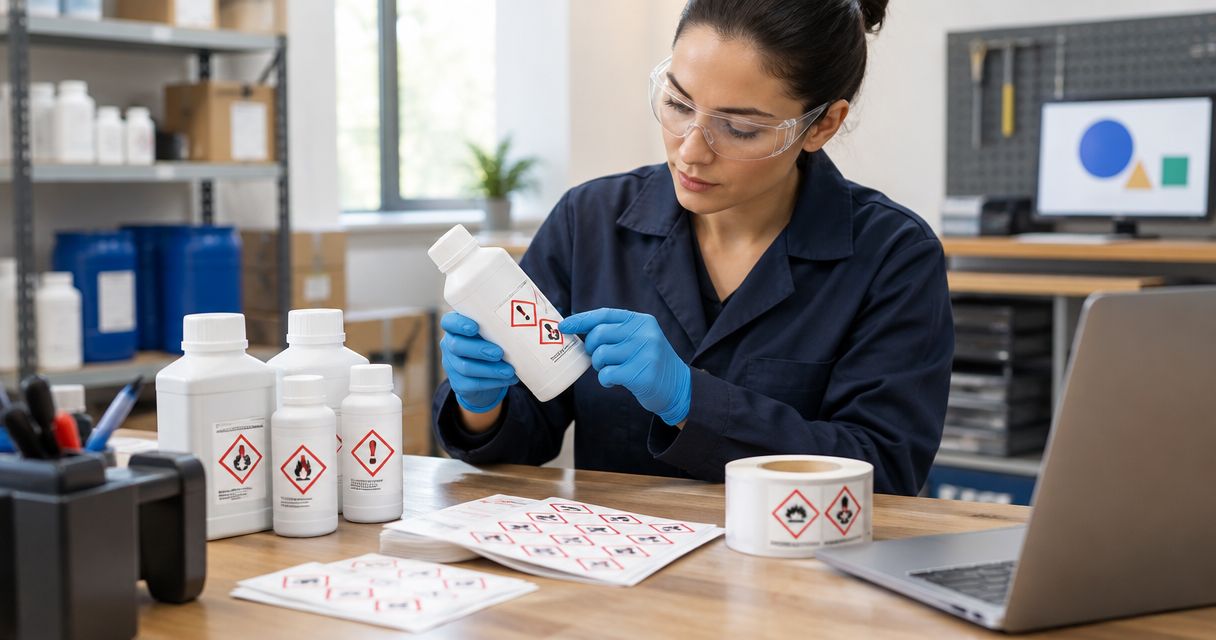
Best overall for a small shop in 2026: a write-on GHS label kit, provided each label is filled out from the correct safety data sheet. Best for frequent chemical changes: a print-on-demand GHS label kit. Best for a fixed, verified chemical inventory: a preprinted GHS label kit. No kit fixes a label that names the wrong chemical or leaves out its hazards.
- Write-on GHS chemical labeling kits for manufacturers fit small inventories, but each label needs chemical-specific information.
- Print-on-demand GHS kits fit shops that change chemicals or need repeatable labels across work areas.
- Preprinted GHS labels work for verified, stable inventories; a matching pictogram alone is not a complete label.
- GigLine Safety & Compliance helps manufacturers check the floor, findings, fixes, and proof; it does not sell labeling kits.
Why this matters
A label is useful only when a worker can connect it to the chemical in the container and understand the hazard. In 2026, start with the container on the floor, then check the safety data sheet (SDS) and your written hazard communication program. Do not choose a kit by the number of stickers in the box.
OSHA's Hazard Communication Standard, 29 CFR 1910.1200, sets different rules for shipped containers and containers labeled for workplace use. That distinction matters when you pour a chemical into a spray bottle, refill a process container, or receive a drum from a supplier. For a broader look at where labels fit alongside other shop controls, read OSHA compliance kits for manufacturers.
GigLine Safety & Compliance works with manufacturers in North Carolina's Piedmont Triad. The service question is not which kit looks official. It is whether the container, label, SDS, and worker instructions agree when someone needs them.
What makes the best GHS chemical labeling kit
Use these checks before you compare formats:
- Correct product identifier. The container name must let workers connect the chemical to the SDS and the written hazard communication program. A generic label for a broad chemical category does not establish that connection.
- Room for the actual hazards. A blank pictogram grid is not the same as a completed label. Check the chemical's SDS and use the information required for that container and labeling method.
- Fit for the container. A label that peels off a bottle or becomes unreadable where the container is used fails its job. Check adhesion and legibility on the containers you actually use.
- A workable update method. If formulations, suppliers, or container contents change, someone must review and replace affected labels. Choose a format your shop can maintain.
- A check against the floor. Count unlabeled and mismatched containers in work areas, not just unused labels in a cabinet. The kit should help close those findings.
- Clear ownership. Decide who writes or prints labels, who checks them against the SDS, and who replaces damaged labels. A kit cannot make those decisions for you.
GHS labeling kits at a glance
| Kit format | Best for | Standout feature | Key limitation |
|---|---|---|---|
| Write-on GHS label kit | Small inventories and occasional transfers | Labels can be completed at the container | Handwritten details need careful review and can become hard to read |
| Print-on-demand GHS label kit | Frequent changes or repeat labels | A reviewed label can be printed again | Incorrect source information gets repeated just as easily |
| Preprinted GHS label kit | Stable, verified chemical inventories | Prepared labels reduce handwriting | Stock becomes misleading when the chemical or hazard information changes |
GigLine Safety & Compliance does not sell GHS chemical labeling kits. The three formats above are ways to produce labels, not substitutes for checking what is in each container. For a small operation, the right format is the one your staff can complete, verify, apply, and keep readable.
1. Write-on GHS label kit: best for a small inventory
A write-on kit supplies blank or partly printed labels with spaces for chemical and hazard information. It fits a shop where someone can identify each transferred chemical, consult the SDS, and complete the label before the container joins routine work. It is the simplest format to correct when the shop uses only a limited set of chemicals.
That simplicity has a cost in attention. A worker must write the right information in a legible hand, and a second look is sensible when similar chemicals sit near each other. If the label has too little room for the information your labeling method requires, choose another format rather than squeezing words until no one can read them.
Write-on GHS label kit pros:
- You can prepare a label where the transfer happens.
- You can check the product identifier against the source container and SDS before filling it in.
- You do not need a printer to replace a damaged label.
Write-on GHS label kit cons:
- Handwriting and small label fields make legibility harder to control.
- Repeatedly writing the same information creates opportunities for inconsistent labels.
- A blank template does not tell you which hazards apply to a chemical.
Best for: A small, stable inventory with occasional transfers and a person responsible for checking completed labels. Choose it when workers can keep the writing readable and verify each label before the container is used.
2. Print-on-demand GHS label kit: best for changing inventories
A print-on-demand setup uses label stock and a printer to produce chemical-specific labels when you need them. It fits a manufacturer that changes chemicals, replaces worn labels regularly, or labels the same chemical in several work areas. The advantage is repeatability after the content has been checked.
The main risk is also repeatability. If a saved label uses the wrong product identifier or old hazard information, printing more copies spreads the error. Assign someone to check label content against the current SDS before approving a template, and review it when the chemical or supplier information changes.
Print-on-demand GHS label kit pros:
- Printed text is easier to keep consistent across repeat labels.
- You can replace a damaged label without rewriting every field.
- A controlled template makes review easier than scattered handwritten copies.
Print-on-demand GHS label kit cons:
- Printing cannot verify the contents of a container.
- Templates need an owner and an update process.
- Label stock still needs to stay attached and readable in the work area.
Best for: Shops with recurring labels, multiple work areas, or changes to their chemical inventory. Choose it only if someone maintains the templates and checks them against the SDS.
3. Preprinted GHS label kit: best for a fixed inventory
Preprinted kits contain labels prepared before a worker reaches the container. They suit a stable list of chemicals when each label has been checked against the specific product and its SDS. They are less useful when the shop buys substitutes, mixes materials, or regularly changes suppliers.
Do not treat a hazard pictogram as a product label by itself. The pictogram communicates a type of hazard; it does not identify what is in the bottle. Check the complete label content required for the container and the labeling approach your workplace uses.
Preprinted GHS label kit pros:
- Workers do not have to handwrite the same approved information each time.
- Prepared labels can make replacement straightforward for an unchanged chemical.
- A fixed label set is easier to review against a fixed chemical list.
Preprinted GHS label kit cons:
- A label for a similar-sounding product can be applied to the wrong container.
- Stock needs review when a product or its hazard information changes.
- A pictogram-only sticker does not identify the chemical.
Best for: A verified chemical inventory that rarely changes. Choose it only after matching every label to the exact chemical and SDS; set aside labels that no longer match.
Match the kit to the labeling rule
Under 29 CFR 1910.1200(f)(1), a shipped-container label carries specified elements, including a product identifier, signal word, hazard statements, pictograms, precautionary statements, and responsible-party information. A kit with blank spaces does not supply those facts. Check the supplier's shipped-container label and the SDS rather than guessing from a pictogram chart.
Workplace containers follow 29 CFR 1910.1200(f)(6). Their labels must identify the product and communicate general hazard information; the employer's hazard communication program must make specific hazard information available to workers. A workplace label therefore does not always need to reproduce every element of a shipped-container label. Pick the kit after you decide which containers it will serve.
There is a narrow exception for a portable container used only by the employee who transferred the chemical, under that employee's control and for immediate use. Under 29 CFR 1910.1200(c), immediate use means use only by that employee within the work shift in which the transfer occurs. Do not use that exception to leave an ordinary shared spray bottle unlabeled.
In 2026, the practical check is simple: can a worker identify the container, find its SDS, and understand the relevant hazards without guessing? If the answer is no, more labels in a drawer will not solve it.
A floor-to-proof labeling check
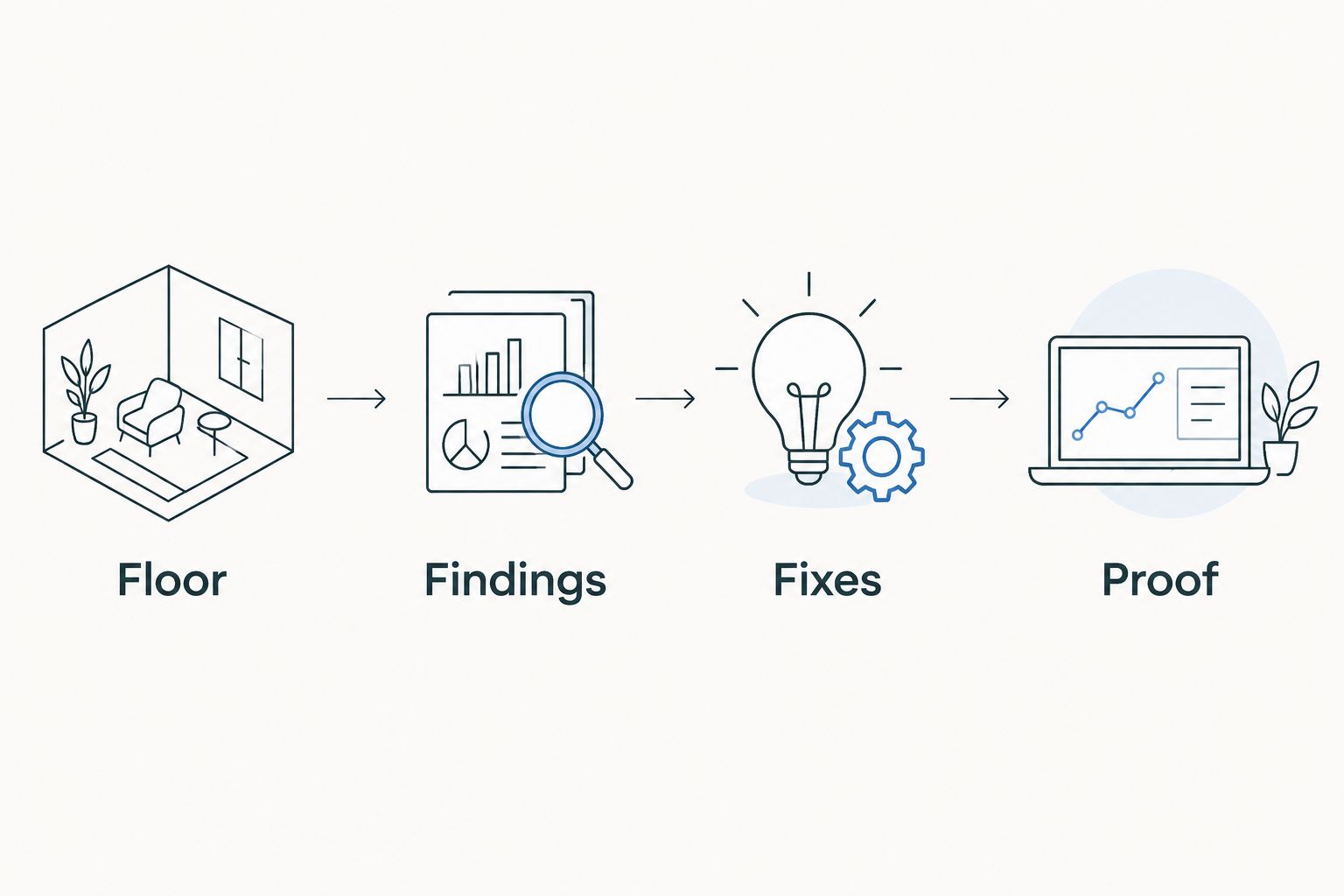
Start where chemicals are used, not where supplies are stored. This sequence separates a purchasing decision from a hazard communication fix:
- Floor: Find chemical containers in use, including secondary containers. Note labels that are missing, damaged, illegible, or inconsistent with the stated contents.
- Findings: Match each questionable container to its source product and SDS. If you cannot identify the contents, do not invent a name from the container's location or appearance.
- Fixes: Choose the label format that fits the container and work area. Verify the information before anyone writes, prints, or applies it.
- Proof: Check the corrected container on the floor. Confirm that workers can connect its identifier to the SDS and that the label remains readable during use.
This is the Floor → Findings → Fixes → Proof check. It also follows FIND → BUILD → MAINTAIN: find the mismatch, build a usable labeling process, then keep labels and source information current. Neither sequence turns a kit into a guarantee of compliance.
For a plant manager, the handoff matters. If one person orders chemicals, another transfers them, and another maintains the SDS collection, decide who checks the label at each point. The process needs to work when the usual person is absent, not just when a new kit arrives.
How these kits were ranked
The ranking favors a small manufacturer's ability to make a correct, readable, maintainable label. Write-on labels come first because they fit occasional transfers without adding a template to maintain. Print-on-demand comes next for repeat work, where control of the source information matters more than printing speed. Preprinted labels come last because they depend on an exact match between stocked labels and the chemicals on the floor.
This is a format ranking, not a ranking of named vendors. No manufacturer, label material, or printer has been tested here. Check a kit's label fields and material against your containers and work conditions before selecting it.
Which GHS labeling kit should you choose?
Choose a write-on GHS label kit if your chemical inventory is small and transfers are occasional. Choose a print-on-demand GHS label kit if you need repeat labels and can keep approved templates current. Choose a preprinted GHS label kit only if you have matched its labels to a stable, verified inventory.
If containers on the floor do not match their labels, postpone the kit decision. Identify the chemicals, check the SDS collection, and fix the labeling process first. GigLine Safety & Compliance can address that floor-to-document gap through a Compliance Readiness Visit in the Piedmont Triad; it does not replace your responsibility to maintain the program.
FAQ
What is the best GHS chemical labeling kit for a small manufacturer in 2026?
A write-on GHS label kit is the best starting format for a small inventory with occasional transfers. Complete each label using the correct chemical information and check that it remains legible where the container is used.
Is a preprinted GHS label better than a write-on label?
A preprinted GHS label is better for a stable chemical inventory only when it matches the exact product and its SDS. A write-on label is easier to adapt to occasional transfers, but its contents still need review.
Does OSHA require every workplace label to show all shipped-container GHS elements?
No. OSHA's workplace-label rule in 29 CFR 1910.1200(f)(6) permits a different labeling approach if its requirements are met and specific hazard information is available through the hazard communication program.
Do GHS pictogram stickers alone satisfy workplace labeling rules?
No. A pictogram sticker alone does not identify the chemical in the container. Check the product identifier and the hazard information required by your workplace labeling approach.
Does a transferred chemical always need a new label?
No. OSHA has a narrow exception for a portable container used only by the employee who made the transfer, under that employee's control and for immediate use within the same work shift. A shared or stored container does not meet that description.
Where should I check a chemical's hazards before printing a label?
Check the chemical's SDS and the source container label before printing. SDS Section 2 identifies hazards; confirm that the product identifier connects the container to the correct SDS.
Can GigLine Safety & Compliance supply a GHS label kit?
GigLine Safety & Compliance does not sell GHS label kits. Its Compliance Readiness Visit can help a Piedmont Triad manufacturer identify gaps between containers, labels, documentation, and work practices.
One last thing
In 2026, do not start the label check with a new box of stickers. Pick a container in active use and ask the person using it to identify the chemical and find its SDS. That check tells you whether you need a different kit, a corrected label, or a better handoff between purchasing and the floor.