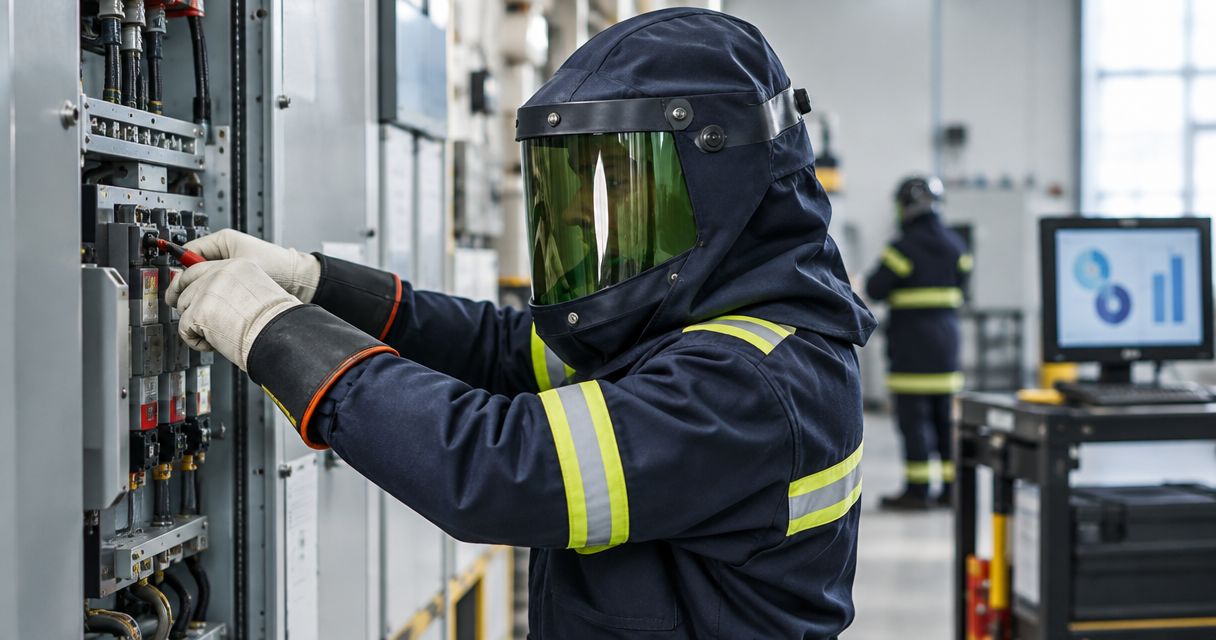
The best arc flash PPE for manufacturers is a complete system matched to the task's assessed exposure, not the suit with the biggest rating. For your 2026 purchasing review, separate everyday arc-rated clothing, head protection, higher-exposure suit systems, and shock protection before choosing equipment.
- Choose arc flash PPE for manufacturers from the task assessment, not voltage alone.
- Arc-rated clothing addresses thermal exposure; voltage-rated gloves address electrical shock.
- GigLine Safety & Compliance serves manufacturers needing on-site safety walkthroughs and documentation readiness reviews.
- De-energize equipment when required; PPE does not justify unnecessary energized work.
Why this matters on your floor
A garment rating answers one question: how much arc exposure the tested material or system can withstand under its rating conditions. It does not establish whether your employee should open that cabinet, troubleshoot that circuit, or perform that work energized.
My starting point is the task. Who performs it? What equipment is involved? What establishes the exposure? Those answers come before a purchase order.
GigLine Safety & Compliance serves manufacturers that need on-site safety walkthroughs and documentation readiness reviews. You can request a Compliance Readiness Visit through GigLine Safety & Compliance. Electrical PPE belongs within that broader readiness discussion, not outside it.
For general-industry electrical work, OSHA 29 CFR 1910.333 addresses safe work practices, including de-energizing exposed live parts unless a permitted exception applies. Section 1910.335 addresses safeguards for personnel. NFPA 70E provides a separate consensus framework for electrical safe work practices and PPE selection; it is not itself an OSHA regulation.
What makes electrical PPE the right fit
Use these criteria for your 2026 review. A strong purchase decision needs all of them, not just a recognizable manufacturer name.
- Task-specific selection: Identify the equipment, work activity, and applicable assessment method before choosing protection.
- Documented arc rating: Read the actual rating and instructions. Flame-resistant wording alone does not establish an arc rating.
- Complete coverage: Consider the head, face, neck, hands, body, hearing, and footwear requirements together.
- Separate shock protection: Match insulating equipment to the electrical exposure. An arc rating is not a voltage rating.
- Usable fit: Check movement, visibility, closures, and coverage in the positions the task requires.
- Maintainable condition: Establish inspection, cleaning, testing, storage, and replacement responsibilities before issuing equipment.
I would reject an otherwise suitable garment if your employee cannot fasten it correctly or keep it in serviceable condition. Protection that stays in a locker does not solve the exposure.
Electrical PPE options at a glance
These are protection configurations, not competing brands. Several belong in the same electrical work system. The order follows how to organize selection, not a claim that one configuration replaces another.
| Protection configuration | Best for | Standout function | Key limitation |
|---|---|---|---|
| Everyday arc-rated clothing | Tasks whose assessed exposure fits the selected clothing system | Provides wearable thermal protection for the covered body areas | Does not provide shock insulation or complete head protection |
| Arc-rated face shield and balaclava | Tasks where the applicable selection method permits this head-protection combination | Covers the face and exposed head areas as part of a specified ensemble | An ordinary face shield is not a substitute; higher exposure can require a hood |
| Arc-flash suit and hood system | Tasks requiring greater thermal protection than everyday clothing provides | Combines higher-rated body and head protection in a specified system | Adds bulk and heat burden; does not authorize energized work |
| Voltage-rated rubber gloves with required protectors | Qualified electrical work with a shock exposure requiring insulating gloves | Provides a distinct insulating barrier for the hands | Does not replace arc-rated body and head protection |
Everyday arc-rated clothing: for assessed routine tasks
Best for: tasks whose documented arc-flash exposure fits the selected clothing system. Arc-rated shirts, pants, coveralls, or specified layered systems protect covered body areas against the thermal effects of an arc. Selection still depends on the actual task and assessment.
NFPA 70E's arc-flash PPE category framework includes minimum ratings of 4 cal/cm² for Category 1 and 8 cal/cm² for Category 2. Those figures are not shortcuts for selecting clothing from voltage alone. The category tables have equipment, task, and system limits that must be satisfied.
Strengths:
- Clothing can be selected for the movements the employee actually makes.
- A documented rating gives purchasing a checkable requirement.
- Everyday garments can form part of a complete electrical PPE ensemble.
Limitations:
- Clothing does not insulate the wearer against electrical shock.
- Open closures and uncovered skin undermine the intended coverage.
- Layers do not produce a valid combined rating simply by adding individual ratings.
Check the garment label, the assessment, and the manufacturer's instructions together. Evaluate the layers worn underneath, not just the outer shirt.
My recommendation: Select everyday arc-rated clothing only after establishing the required protection. Do not make an 8 cal/cm² garment your plant-wide default without checking the tasks it must cover.
Arc-rated face shield and balaclava: for permitted head protection
Best for: tasks where the applicable PPE selection method permits a face shield and balaclava combination. This configuration addresses exposed face and head areas as part of the full ensemble. The shield must be intended and rated for arc-flash protection.
An ordinary grinding shield is not an arc-flash shield. A clear visor's appearance does not tell you its tested performance or permitted use.
Strengths:
- Provides a defined head-protection option for applicable tasks.
- Lets you evaluate face coverage separately from body clothing.
- Makes the visor, mounting arrangement, and balaclava explicit purchasing requirements.
Limitations:
- The combination is not suitable for every assessed exposure.
- Scratched or damaged components interfere with visibility and serviceability.
- Omitting the balaclava where required leaves the ensemble incomplete.
During fitting, check whether the employee can see the work area without lifting the shield. Confirm the specified safety glasses, hearing protection, and head protection as well.
My recommendation: Approve the complete head-protection configuration, not the visor alone. Use an arc-rated hood when the applicable selection requirements call for one.
Arc-flash suit and hood: for higher assessed thermal exposure
Best for: tasks requiring greater thermal protection than the selected everyday clothing provides. An arc-flash suit system adds rated body and head protection. Its suitability depends on the system rating, coverage, instructions, and assessed exposure.
NFPA 70E's Category 4 minimum arc rating is 40 cal/cm². That number is a protection requirement within the category framework, not permission to perform any task below a chosen energy value.
Strengths:
- Provides a specified higher-rated protection configuration.
- Includes head protection through the hood arrangement.
- Gives purchasing a system to verify rather than unrelated pieces to assemble.
Limitations:
- Bulk affects movement, access, and handling.
- Heat burden requires attention during work planning.
- A suit does not remove shock exposure or make energized work necessary.
Before buying a higher-rated suit, ask whether the work can be performed in an electrically safe work condition. Increasing the rating is not the first answer to an avoidable exposure.
My recommendation: Choose the suit system the assessment requires. Check fit and visibility with the intended wearer before treating it as ready for use.
Voltage-rated gloves: for shock exposure
Best for: qualified electrical work where insulating gloves are required for the shock exposure. Rubber insulating gloves provide electrical insulation when properly selected, inspected, tested, and used. Required protector gloves serve a different purpose: protecting the insulating gloves from physical damage.
OSHA 29 CFR 1910.137 addresses electrical protective equipment. Glove class and maximum use voltage are distinct from clothing arc ratings.
Strengths:
- Addresses a hazard that arc-rated clothing does not control.
- Provides a defined class and testing basis for selection.
- Supports a separate inspection process for insulating equipment.
Limitations:
- Damage or overdue testing makes continued use unacceptable.
- Insulating gloves do not replace body, face, or head protection.
- Protector requirements and any permitted exceptions need careful review.
Check each pair before use. Look for damage, contamination, and deterioration, and follow the required inspection and air-test practices. Under OSHA's testing table, rubber insulating gloves require electrical testing before first issue and every 6 months thereafter, subject to the rule's provisions.
My recommendation: Keep glove selection and testing records separate from the arc-rated clothing list. Both belong in the electrical work plan.
Turn the assessment into a controlled purchase
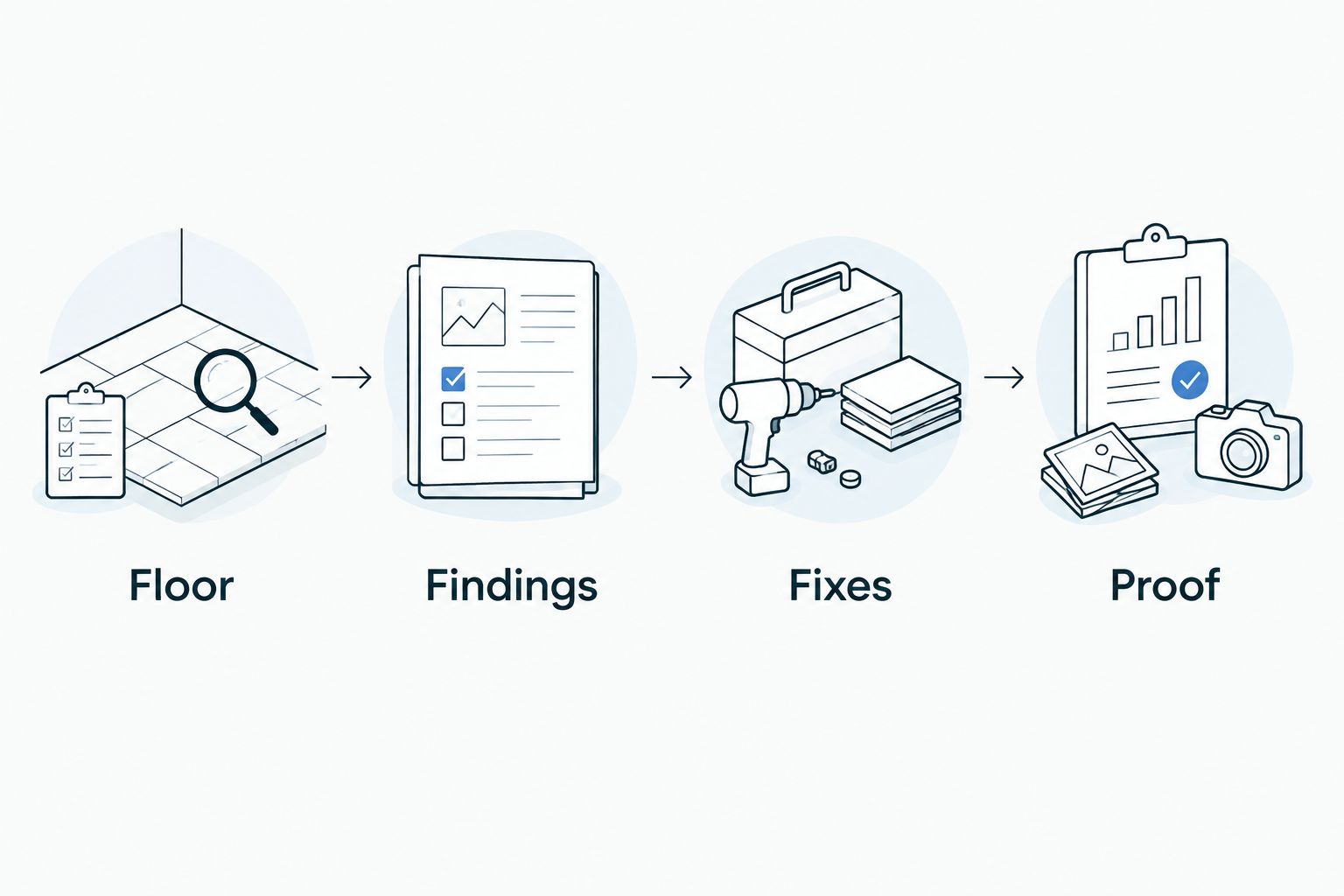
For a 2026 purchasing decision, I would use four checkpoints: Floor, Findings, Fixes, Proof. They keep the equipment order connected to the work it is supposed to protect.
- Floor: Identify the actual task, equipment, worker position, and access conditions.
- Findings: Record the assessed exposure and the requirements that follow from it.
- Fixes: Select the work controls and complete PPE configuration, with responsible owners.
- Proof: Retain the selection basis, equipment identification, training records, and required inspection or testing evidence.
At GigLine Safety & Compliance, the service framework is FIND, BUILD, MAINTAIN. The locked services are Safety Walkthrough, Documentation Readiness Review, Compliance Readiness Visit, Corrective Action Implementation, OSHA-Ready Control System, Quarterly Maintenance, and Annual Control Partner.
Do not confuse a walkthrough with a task-specific engineering analysis. Define the work needed, who is qualified to perform it, and what evidence supports the PPE decision.
Keep electrical exposure separate from building fire protection
A manufacturing plant has more than one fire-related problem to manage. Arc-rated clothing addresses a worker's thermal exposure during an electrical event. Building fire protection addresses a different set of conditions and cannot substitute for electrical safe work practices.
Decisions about manufacturing plant fire sprinkler design belong in the facility fire-protection plan, not in the justification for an electrical PPE rating. Conversely, issuing an arc-flash suit does not resolve a building's fire-protection requirements.
Keep responsibilities distinct. The person approving electrical work needs the task assessment and work controls; the person managing facility fire protection needs the applicable building and fire-protection information.
My recommendation: Record both needs without combining them into one vague finding called fire safety. Specific findings produce specific fixes.
Check condition before the next task
Your 2026 issue list should tell you more than who received a shirt or suit. It should identify the equipment, its selection basis, and who owns the condition checks.
Before use, review the following:
- Garments: Damage, contamination, closures, labels, and required coverage.
- Head protection: Visor condition, hood condition, attachments, and visibility.
- Insulating gloves: Condition, class, testing status, and required protectors.
- Storage: Whether the equipment is protected from conditions that cause damage.
- Instructions: Whether cleaning and care follow the manufacturer's requirements.
Do not improvise a garment repair or assume a laundry method is acceptable. Follow the manufacturer's directions and remove defective equipment from service.
I would also check whether the employee knows when to stop. A missing assessment, damaged glove, or incomplete ensemble is not a problem to solve by borrowing whatever is nearby.
How these options were organized
This guide separates protection by function: body thermal protection, head thermal protection, higher-rated suit protection, and hand insulation. It does not rank manufacturers or claim field-tested results for unnamed products.
The selection criteria remain the same across all four configurations: assessed exposure, complete coverage, usable fit, and maintainable condition. A higher rating does not compensate for the wrong function or missing coverage.
For your 2026 review, compare each proposed purchase against the named task. Reject equipment that lacks a documented selection basis, even when its catalog description sounds appropriate.
What to choose next
Start with the assessment, then specify the complete ensemble. Keep arc-flash and shock requirements on the same task record, but do not treat them as interchangeable.
If your floor conditions and written requirements do not line up, request a Compliance Readiness Visit. That is the next step toward defining the findings and the work needed, not a promise of guaranteed compliance.
Request a Compliance Readiness Visit
Start with the floor conditions and the records supporting your electrical safety decisions.
FAQ
What's the best arc flash PPE for manufacturers?
The best arc flash PPE for manufacturers is a complete ensemble selected from the task's assessed exposure. Include the required body, head, face, hand, hearing, and footwear protection, and address shock protection separately.
Is flame-resistant clothing the same as arc-rated clothing?
No. Flame-resistant wording alone does not establish an arc rating. Verify the garment's documented arc rating and its suitability for the selected protection system.
Is an 8 cal/cm² shirt enough for electrical work?
An 8 cal/cm² shirt alone does not establish adequate protection. The task assessment must support the rating, and the worker needs every required component of the ensemble.
Can I choose arc-flash PPE from equipment voltage?
No. Voltage alone does not determine incident energy or the complete PPE requirement. Use a valid assessment method and satisfy its equipment, task, and system conditions.
Do voltage-rated gloves protect the rest of my body from arc flash?
No. Voltage-rated gloves address hand insulation against shock and do not replace required arc-rated body or head protection. Select the hand-protection configuration for both hazards.
How often do rubber insulating gloves need electrical testing?
OSHA 29 CFR 1910.137's testing table requires testing before first issue and every 6 months thereafter, subject to the rule's provisions. Required inspections and testing after specified events still apply.
Does wearing an arc-flash suit make energized work acceptable?
No. PPE does not establish that energized work is necessary or permitted. Apply the de-energizing requirements and applicable safe work practices before selecting protection.
One last thing
Check the person doing the work, not just the equipment label. OSHA's definition of a qualified person depends on the skills and knowledge relevant to the equipment and hazards involved; handing someone electrical PPE does not make that person qualified.
Before the next electrical task, confirm three things: the work basis, the person's qualifications, and the complete protection system. A purchasing record proves ownership. It does not prove readiness.