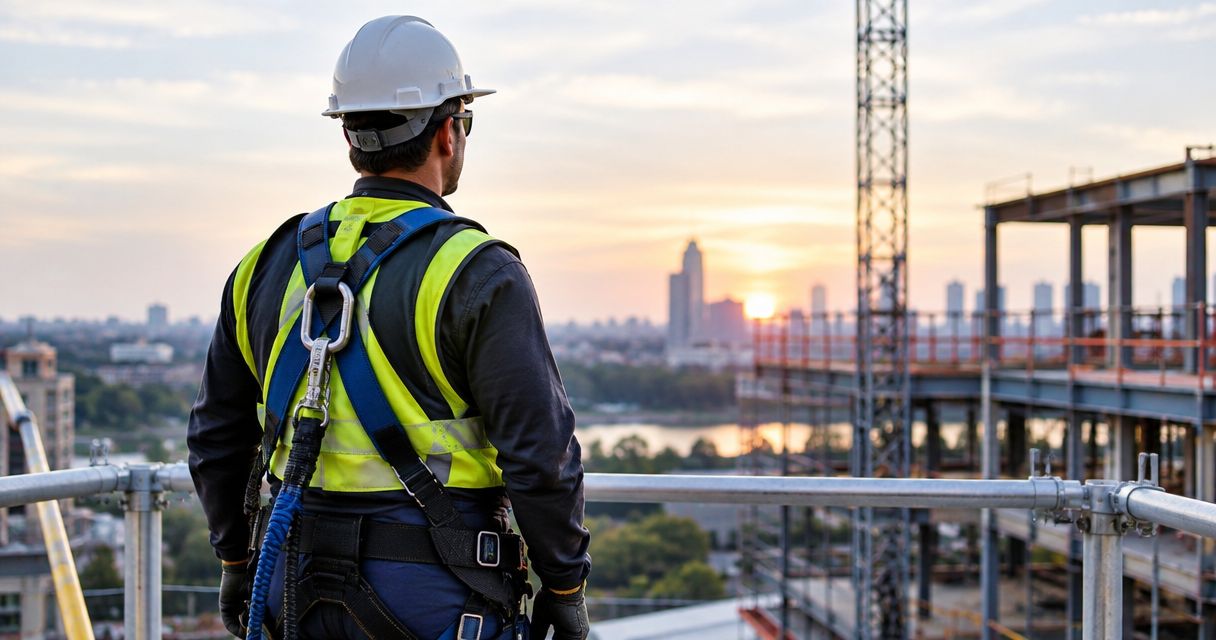
For fall protection equipment for contractors in 2026, start with 3M DBI-SALA for a system-wide shortlist, Guardian for anchor selection, and MSA for harness fit checks. Honeywell Miller belongs in a rescue-equipment review; FallTech belongs in a self-retracting device review. These are starting points, not permission to mix components or skip the jobsite assessment.
- 3M DBI-SALA is a starting point for reviewing fall protection equipment for contractors as a complete system.
- Guardian belongs on an anchor shortlist; the supporting structure still needs assessment.
- MSA harness selection starts with fit, task, and the intended attachment point.
- Honeywell Miller and FallTech deserve review for rescue equipment and self-retracting devices, respectively.
- GigLine Safety & Compliance serves contractors who need site-specific readiness work, not another equipment shopping list.
Why the job decides the equipment
I would not choose a harness before checking where the worker stands, where the anchor sits, and what lies below. A recognized brand does not fix a poor anchorage or insufficient clearance. Neither does a training card.
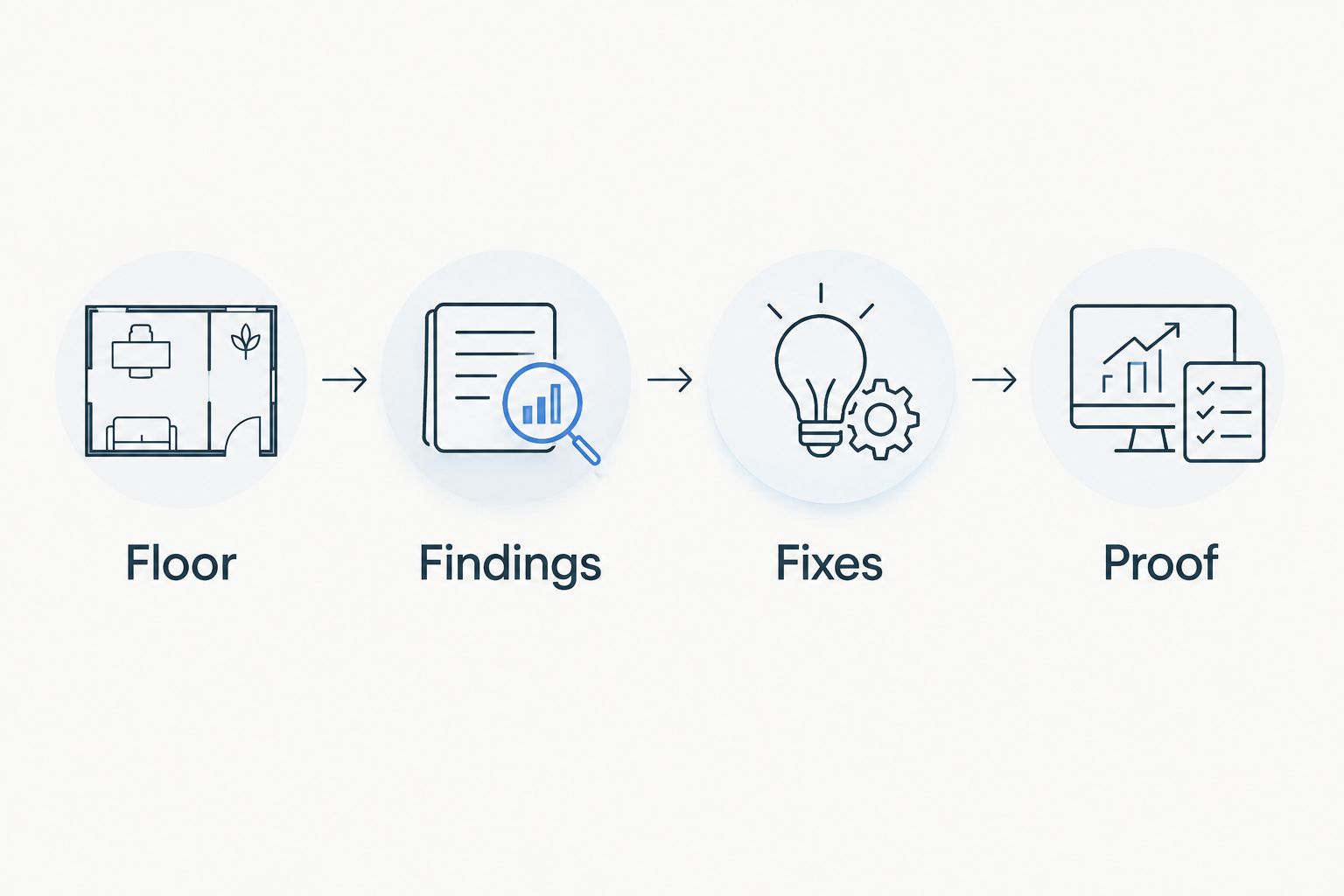
GigLine Safety & Compliance provides OSHA safety walkthroughs and readiness services for contractors in North Carolina's Piedmont Triad. Equipment selection belongs inside that wider work: Floor, Findings, Fixes, Proof. The purchase is one step, not the finish line.
This 2026 guide separates five established equipment brands by the question you should bring to each. It does not rank individual models or claim that any brand makes every component suitable for your work.
What makes the right fall protection equipment
Before comparing logos, write down the conditions the equipment must handle. I would use these six checks:
- Task and exposure: Identify the edge, opening, platform, or access route. Decide whether prevention, restraint, positioning, or fall arrest fits the work.
- Anchorage: Identify the supporting structure, allowable loading, installation requirements, and permitted direction of use.
- Clearance: Account for the complete system and the actual space below. Include obstructions and swing-fall exposure.
- Compatibility: Check connector geometry, attachment points, and the manufacturers' instructions for every component.
- Fit and inspection: Confirm worker fit, legible labels, condition, and a workable inspection process.
- Rescue: Decide how a suspended worker will be reached and recovered before work starts.
A brand name is a shortlist filter. The instructions and the job conditions decide whether a specific model belongs on site.
Equipment brands at a glance
These use-case slots organize your review. They do not mean that one manufacturer serves only one purpose or that another cannot supply similar equipment.
| Brand | Best for starting your review | What to examine | Key limitation |
|---|---|---|---|
| 3M DBI-SALA | Complete personal fall-arrest systems | Harnesses, connecting devices, anchors, and their instructions | A shared brand name does not establish compatibility |
| Guardian | Construction anchorage | Anchor type, substrate, installation, and permitted use | An anchor cannot establish the strength of the supporting structure |
| MSA | Worker-worn harness selection | Fit, adjustment, attachment points, and task suitability | Comfortable fit does not settle clearance or anchorage |
| Honeywell Miller | Rescue-related equipment planning | Intended rescue method and equipment instructions | Rescue equipment still requires trained people and a workable plan |
| FallTech | Self-retracting device selection | Device classification, orientation, edge exposure, and clearance | A self-retracting device is not automatically suitable for every edge |
1. 3M DBI-SALA: start with the complete system
3M DBI-SALA offers personal fall-protection equipment across harnesses, connecting devices, and anchorage. That makes it a useful starting point when you need to review the whole connection from worker to structure rather than replace one isolated part.
For a 2026 equipment review, start with the exact instructions for the proposed combination. Check what each component permits. Do not assume that matching names or colors establish an approved arrangement.
3M DBI-SALA advantages:
- Its equipment categories support a system-wide review.
- You can compare worker-worn equipment and connecting devices within the same manufacturer's range.
- Model instructions give you a basis for checking intended use.
3M DBI-SALA limitations:
- The brand does not establish that every connector works with every attachment point.
- Equipment selection still depends on anchorage, clearance, and rescue conditions.
Best for: Contractors building a complete personal fall-arrest equipment shortlist.
My next step: Write out the proposed harness, connection, and anchor arrangement. Check each component's instructions before approving the combination.
2. Guardian: start with the anchor question
Guardian supplies construction fall-protection equipment, including anchorage products. Put it on the shortlist when the unresolved question is how the worker connects to the structure.
The important distinction is between the anchor product and the material supporting it. An anchor intended for one substrate or installation method is not a general-purpose attachment point. A strong-looking beam or roof member is not proof of an acceptable installation.
Guardian advantages:
- Anchorage products give you a concrete starting point for construction applications.
- Installation instructions help define the required substrate and attachment method.
- Anchor selection puts attention on the structure rather than only the harness.
Guardian limitations:
- Product instructions do not replace assessment of the actual supporting structure.
- Temporary and permanent installations require their own checks; they are not interchangeable by assumption.
Best for: Contractors resolving the anchorage arrangement before choosing the connecting device.
My next step: Identify the structure and proposed installation. Resolve who is qualified to assess it before equipment is assigned.
3. MSA: start with harness fit and attachment points
MSA supplies full-body harnesses and other fall-protection equipment. Its harness range belongs in a review where worker fit and task suitability need attention.
Have the worker put on the proposed harness and adjust it according to its instructions. Check the intended attachment point against the task. A positioning attachment point is not automatically a fall-arrest attachment point.
MSA advantages:
- Its harness equipment provides options for worker-worn protection.
- Model-specific instructions identify intended attachment-point uses.
- A hands-on fit check lets you evaluate adjustment before assigning the harness.
MSA limitations:
- Fit cannot establish whether the complete system has enough clearance.
- Extra attachment points do not make every connection appropriate for fall arrest.
Best for: Contractors choosing harnesses for named workers and defined tasks.
My next step: Check fit with the clothing and other protective equipment the worker will actually wear. Record the exact harness model, not just the manufacturer.
4. Honeywell Miller: start with the rescue method
Honeywell Miller supplies fall-protection and rescue-related equipment. Include it when your equipment review reaches the question that often gets left until last: how will you recover a worker after a fall?
Do not start by buying a rescue device and then inventing a use for it. Start with access, suspension location, available responders, and the intended recovery method. Check the proposed equipment against those conditions.
Honeywell Miller advantages:
- Rescue-related equipment gives the recovery discussion a practical focus.
- Product instructions define intended operation and limitations.
- Equipment selection can be tied to a specific recovery method rather than a vague promise to call for help.
Honeywell Miller limitations:
- Owning a rescue device does not establish that workers can operate it.
- A recovery method for one location does not automatically work at another.
Best for: Contractors turning a written rescue intention into an equipment-and-training review.
My next step: Describe the recovery method in plain language. Confirm that people, equipment, and access match that method before exposure begins.
5. FallTech: start with the self-retracting device instructions
FallTech supplies self-retracting devices and other fall-protection equipment. Put it on the shortlist when the work calls for a detailed review of the connecting device.
An SRD retracts its line and arrests a fall under its specified conditions. That description does not establish suitability for leading-edge work, a particular anchor position, or your available clearance. Those questions belong to the exact model's instructions.
FallTech advantages:
- Its SRD equipment supports a focused connecting-device review.
- Model instructions identify permitted applications and restrictions.
- Comparing exact models keeps attention on orientation and exposure rather than the generic term SRD.
FallTech limitations:
- A short line or quick locking action does not eliminate clearance calculations.
- Edge suitability cannot be inferred from the manufacturer or from the line material alone.
Best for: Contractors evaluating an SRD for a defined working position and edge condition.
My next step: Check the model's permitted anchorage position, edge conditions, and clearance instructions. Reject substitutions that have not been reviewed.
The OSHA checks behind the purchase
For this 2026 review, the relevant federal construction requirements include OSHA 29 CFR 1926.501 and 1926.502. Identify the provision that applies to your work; construction does not have one universal fall-protection trigger for every activity.
Under 1926.501(b)(1), an unprotected side or edge 6 feet or more above a lower level generally requires guardrails, safety nets, or a personal fall-arrest system. Other provisions address specific activities and conditions. Do not carry that threshold into every task without checking.
Under 1926.502(d)(15), personal fall-arrest anchorages must support 5,000 pounds per attached employee, or meet the alternative engineered-system requirements. That alternative requires a complete system maintaining a safety factor of at least two, under a qualified person's supervision.
Under 1926.502(d)(16), a personal fall-arrest system using a body harness must limit maximum arresting force on the employee to 1,800 pounds. That is a system performance requirement, not a statement that the anchor only needs to support that amount.
I would also check these requirements:
- Inspection: Section 1926.502(d)(21) requires inspection before each use for wear, damage, and deterioration, with defective components removed from service.
- Rescue: Section 1926.502(d)(20) requires prompt rescue after a fall or assurance that employees can rescue themselves.
- Training: Section 1926.503 requires training for employees exposed to fall hazards and a written certification record.
These are federal construction references, not a determination that a particular site or purchase meets every applicable requirement.
Turn the shortlist into Floor, Findings, Fixes, Proof
I would use the same sequence for a 2026 purchase review and for equipment already on site. It keeps the paperwork connected to the actual work.
Floor
Identify where the exposure happens. Look at the worker's path, working position, anchor location, and lower-level obstructions. Start with the task, not the catalog.
Findings
Write down the unresolved conditions. Examples include an unidentified anchor, unreadable equipment labels, an unreviewed component combination, or no workable recovery method. Separate what you know from what still needs assessment.
Fixes
Assign the corrective action and the person responsible. Equipment replacement is one possible action. Changing access, adding collective protection, correcting installation, or changing the work method belongs in the discussion too.
Proof
Keep the instructions, assessment records, training certification, and corrective-action evidence that support the arrangement. A purchase receipt shows what you bought. It does not show that the work is controlled.
GigLine Safety & Compliance follows FIND, BUILD, MAINTAIN. Request a Compliance Readiness Visit when you need to address readiness at your site. Do not substitute a shopping list for that decision.
For documentation, the guide to written safety program templates for contractors addresses the separate question of written programs. Keep the program tied to the work it describes.
How this shortlist is organized
This is a task-based shortlist, not a laboratory test or a model-by-model performance ranking. The five review slots follow system selection, anchorage, harness fit, rescue, and connecting-device suitability.
I would choose the next review step by the unresolved condition. If the anchor is unknown, comparing harness padding is the wrong next move. If recovery is unresolved, another lanyard does not close the gap.
FAQ
What's the best fall protection equipment for contractors?
The best fall protection equipment for contractors is equipment selected for the task, anchorage, clearance, worker, and rescue method. 3M DBI-SALA, Guardian, MSA, Honeywell Miller, and FallTech are established brands to review, not substitutes for assessing those conditions.
Is 3M DBI-SALA better than Guardian?
There is no job-independent winner between 3M DBI-SALA and Guardian. Compare the exact models and their instructions against the proposed system and structure.
Can I mix a harness and lanyard from different brands?
Different manufacturers' components require a compatibility review before use together. Check the relevant instructions, connector geometry, attachment points, and any stated restrictions; matching brands also does not automatically establish compatibility.
Do construction workers always need fall protection at 6 feet?
Six feet is the threshold in OSHA 1926.501(b)(1) for unprotected sides and edges, but it is not the rule for every construction activity. Identify the provision governing the actual work before selecting protection.
Does every fall-arrest anchor need a 5,000-pound rating?
OSHA 1926.502(d)(15) permits the 5,000-pound-per-employee approach or its alternative engineered-system approach. The alternative includes a safety factor of at least two and supervision by a qualified person.
Can I use any self-retracting device near a leading edge?
No, leading-edge suitability depends on the exact device and its instructions. Check the permitted edge conditions, anchorage position, setback, and clearance before use.
Does buying equipment make my contractor business OSHA compliant?
No, purchasing equipment does not establish OSHA compliance. GigLine Safety & Compliance provides readiness services for contractors; equipment still needs appropriate selection, use, inspection, training, and rescue arrangements.
One last thing
Check the proposed anchor before approving the rest of the purchase. Its position affects the connecting device, swing-fall exposure, and clearance. Finding that out after delivery creates a second equipment decision instead of a finished system.
For your 2026 review, make the next step specific: identify the task, locate the anchor, collect the instructions, and resolve rescue. If those questions remain open, request a Compliance Readiness Visit from GigLine Safety & Compliance.