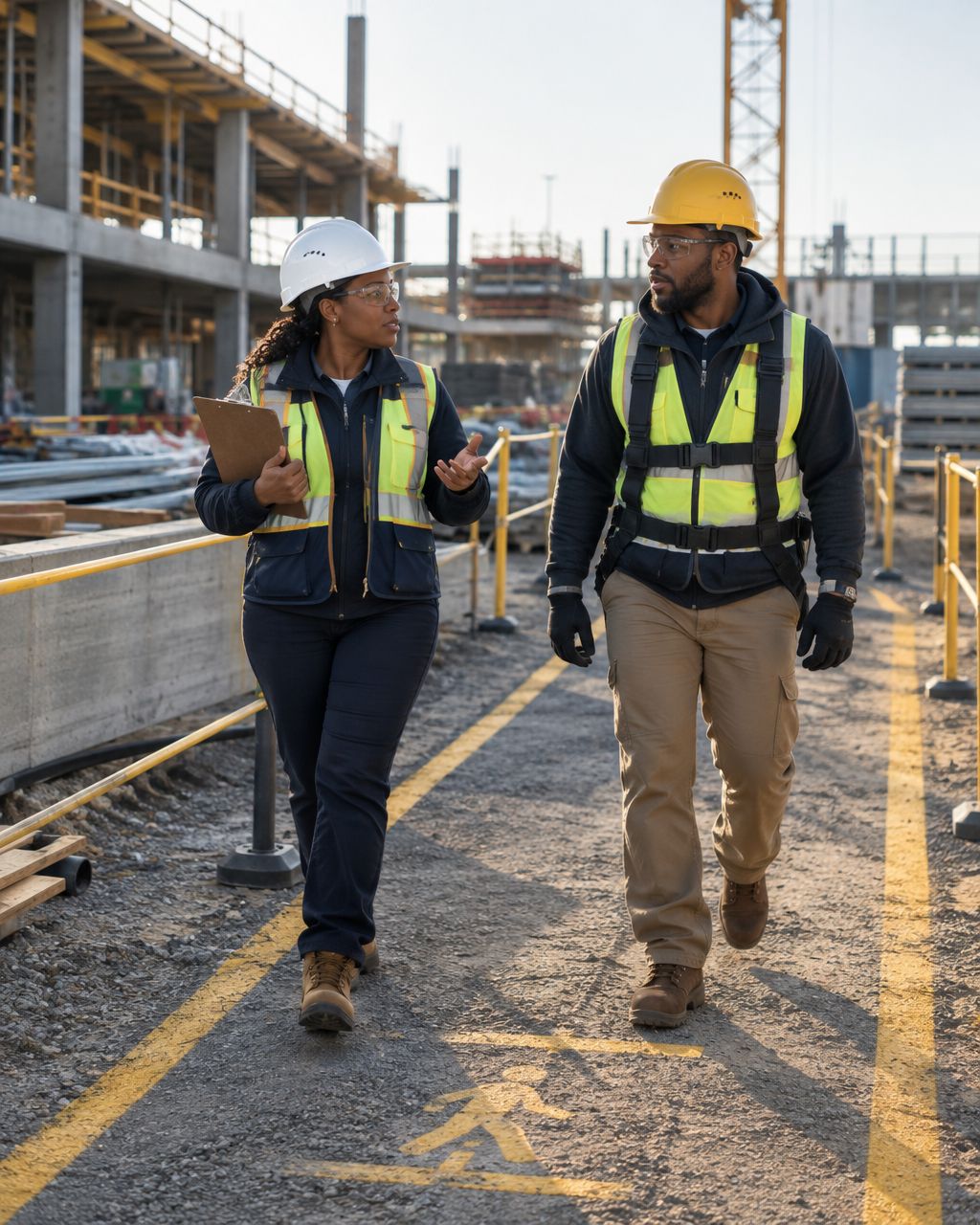
If you need a written program for construction work, start with the applicable rule and a sample you can adapt. Then check it against the equipment, crew, and work at each site. No template or consultant can promise an inspection result.
- Use a sample only after checking the construction rule and your actual jobsite.
- North Carolina's free consultation identifies hazards; the employer must correct identified hazards within the agreed time.
- My Documentation Readiness Review identifies gaps in existing records; writing new programs needs a separate scope.
Why This Actually Matters
A form might name a fall hazard but say nothing about the roof edge the crew reaches this week. Put the procedure beside the work plan and ask who sets the control, who checks it, and what record shows the crew was instructed. That is the test, not how finished the PDF looks.
Start with an applicable OSHA or state sample. If you cannot tell which rule applies, North Carolina's free consultation is another starting point. Use a Documentation Readiness Review to identify record gaps, not as a promise to write a new program.
What Makes a Written Program Actually Hold Up
- Matches the equipment and hazards on your specific jobsite, not a generic industry description
- Covers the required elements for your trade under standards like Hazard Communication
- Names a responsible person and a revision date on the cover page
- Ties directly to a corrective action plan when a gap gets found
- Gets updated when equipment, crew size, or site conditions change
- Stays accessible on site, not buried in a folder nobody opens
Template Sources at a Glance
| Source | Best For | Standout Feature | Key Limitation |
|---|---|---|---|
| OSHA or NCDOL sample programs | A starting structure for the applicable rule | Public examples you can adapt | Check construction applicability and jobsite details |
| Trade-association materials, if available | Language for a particular trade | May address familiar tasks | Confirm contents and access with your chapter |
| NC OSH Consultation Program | A second set of eyes on a jobsite | Free hazard and program review | You must correct identified hazards within the agreed time |
| Generic or AI-generated draft | An outline to check line by line | Fast first pass | No knowledge of this crew or site |
| GigLine Documentation Readiness Review | Finding gaps in existing records | A scoped review | New programs and corrections need separately agreed work |
1. OSHA's Free Sample Programs: Best for Getting Something on File Today
OSHA publishes free sample written programs and compliance assistance quick cards directly on osha.gov, covering things like Hazard Communication, emergency action plans, and respiratory protection. These are the most common starting point I see contractors reach for first.
OSHA sample programs pros:
- No cost, available immediately
- Covers the required elements on paper
- Gives a contractor with zero documentation a real skeleton to build from
OSHA sample programs cons:
- Written for general industry use, not jobsite-specific hazards
- Doesn't reflect your actual equipment list or crew size
- Needs significant editing before it matches a construction trade
Best for: contractors with no written program at all who need something on file today.
Verdict: start here, but don't stop here.
2. Trade-association materials: check what your chapter actually offers
If you belong to a trade association, ask for its current safety-program materials. I would not assume a particular AGC or ABC chapter offers a template pack or that the pack covers silica, trenching, and fall protection. Confirm the contents and compare each section with the construction standards and tasks that apply to you.
Best for: a contractor with existing access to trade materials and someone who can adapt them. The limitation is plain: a shared document cannot know your crew's current work.
3. NC Department of Labor's OSH Consultation Program: Best for a Second Set of Eyes
North Carolina operates its own OSHA-approved State Plan through the NC Department of Labor. Its On-Site Consultation Program will walk a jobsite and point out what a written program needs to cover, and it doesn't issue citations for hazards found during that visit.
NC OSH Consultation Program pros:
- Free of charge
- Consultants know North Carolina enforcement patterns
- On-site, not a paperwork-only review
- Produces a hazard list you can build a program around
NC OSH Consultation Program cons:
- The employer agrees to correct identified hazards by the agreed deadline and confirm correction in writing
- Scope and timing need to be arranged with NCDOL
- You still own the program after the visit
Best for: contractors who want a second set of eyes before writing anything.
Verdict: book it early, use the findings.
4. Generic and AI-Generated Template Bundles: Best for Nothing Beyond a Placeholder
A generic or AI-generated outline can save typing. It cannot tell you where the temporary edge is today, who will set the protection, or which crew needs instruction. Use it only as a draft that you check line by line against the task.
Generic/AI bundle pros:
- Fast, often cheap or free
- Looks complete on the page
- Gives you an outline to check against the applicable standard
Generic/AI bundle cons:
- Doesn't know your equipment, crew size, or last incident
- Can leave the current site and crew out of the procedure
- AI-generated versions can cite standards that don't apply to your trade
Best for: nothing beyond a placeholder while you build the real thing.
Verdict: skip it as a final answer.
5. GigLine Documentation Readiness Review: best for existing records
For the Documentation Readiness Review, I examine the records in the agreed scope and name the gaps. If the job needs an on-site floor check as well, the Compliance Readiness Visit combines that with a walkthrough. If the finding requires a new program or corrective work, put those deliverables in a separate written scope.
Documentation Readiness Review pros:
- Names gaps in the existing records
- Gives the owner a list to prioritize
- Can inform a separate scope for program creation or corrective work
Documentation Readiness Review cons:
- Costs more upfront than a free download
- Currently covers the Piedmont Triad region of North Carolina
- Doesn't replace your obligation to keep records updated after the review
Best for: contractors with existing documents that need a focused review.
Next step: Pull one current procedure and the work plan it is meant to cover. Mark the mismatch before commissioning a rewrite.
How I Ranked These
Judge each option by the applicable rule, the current task, and who will correct a mismatch. A document review is a service, not another template. It does not belong in a ranking of downloadable files as though it were one.
Which Written Safety Program Template Should You Choose?
If you have nothing on file, identify the applicable rule and adapt a current OSHA or NCDOL example. If you have association materials, check their contents before using them. For a free on-site look, ask NCDOL about consultation and its correction obligations.
If you have a draft already, compare its first procedure with the crew's current work. Write down the missing step, assign its correction, and verify the change. This contractor consultant guide is background on outside help, not a booking page.
Check your current program
Ask for a defined documentation review if the procedure and the work do not match.
FAQ
What's the best written safety program template for contractors in 2026?
Start with a sample for the rule that applies and adapt it to the work. Check the document against the crew's actual tasks; no template guarantees an inspection result.
Are OSHA's free sample programs good enough for a construction site?
Not without checking the applicable construction standard and the current work. Adapt the sample to the site, assign owners, and verify the controls employees actually use.
Do AI-generated safety programs meet OSHA requirements?
An AI-generated safety program can look complete and still miss what your jobsite actually needs. It doesn't know your equipment, your crew size, or your last incident, and it can cite standards that don't apply to your trade.
How long do I have to keep written safety program records?
The five-year rule in 29 CFR 1904.33 applies to specified injury and illness records, not every written safety program. Check the applicable program standard and keep the working procedure current.
Is North Carolina's OSH Consultation Program really free?
Yes. North Carolina operates its own OSHA State Plan through the NC Department of Labor, and its On-Site Consultation Program doesn't charge for a visit and doesn't issue citations for what consultants find during that visit.
How much does an OSHA safety consultant cost in North Carolina?
Cost depends on the scope of the visit and what needs fixing afterward. Check current details on what an OSHA consultant visit involves before you budget for a program overhaul.
What's the difference between a template and a compliance-ready written program?
A template is a starting structure. A working program names the controls, people, and work the applicable standard requires; a review can find gaps but does not guarantee an inspection result.
Does a written safety program need to be site-specific?
For construction Hazard Communication, 29 CFR 1926.59 applies the requirements of 1910.1200. The written program must include the hazardous-chemical list, labeling and safety-data-sheet methods, and employee information and training; check multi-employer arrangements where applicable.
One Last Thing
Check the cover page date on whatever written program you have right now. If the crew has changed the task or equipment since that date, compare the procedure with the current work. A live document gets touched every time something on your floor changes. A template gets filed once and forgotten, and that's exactly how it reads in 2026.